Dental Assistant Classes in Birmingham, AL: What to Look for and Where to Start
Finding dental assistant classes nearby is the easy part — every mid-size city has options. The harder part is figuring out which classes actually prepare you for the job versus which ones just check a box on paper.
Here’s what to evaluate when comparing dental assistant classes in Birmingham, and what the research says about which training characteristics produce the best outcomes.
What Dental Assistant Classes Should Teach
O*NET — the U.S. Department of Labor’s occupational information system — identifies 35+ specific tasks that dental assistants perform on the job. Classes that don’t cover the full scope leave gaps that show up during interviews and in the first weeks of employment.
A complete program addresses all five competency areas:
Clinical Skills (the largest area)
- Chairside assisting: Four-handed dentistry technique, instrument passing, suction management, tissue retraction, procedure setup and breakdown
- Dental radiography: Sensor positioning, exposure technique, digital and film-based systems, radiation safety, image evaluation
- Infection control: Instrument cleaning, autoclaving, biological monitoring, operatory disinfection, OSHA compliance, sharps disposal
- Dental materials: Impression materials (alginate, PVS), cements, composites, bonding agents, temporary restorations — mixing, handling, and application
- Patient care: Vital signs, topical anesthetic application, anxiety management, pre-op and post-op instructions
Administrative Skills
- Scheduling and patient flow management
- Dental charting and records
- Insurance verification and claims processing
- Practice management software (Dentrix, Eaglesoft, Open Dental)
- Inventory management and supply ordering
Technology Competencies
O*NET specifically lists technology skills dental assistants need:
- Digital radiography systems
- Electronic health records
- Intraoral cameras and digital scanning
- Sterilization monitoring systems
Regulatory Knowledge
- OSHA bloodborne pathogen and hazard communication standards
- HIPAA patient privacy compliance
- State dental practice act requirements
- CDC infection control guidelines
- Radiation safety protocols
Professional Skills
- Patient communication — especially with anxious patients
- Workplace professionalism and team coordination
- Time management in fast-paced clinical settings
- Resume writing and interview preparation
How to Evaluate Classes in Birmingham
1. Where does training happen?
Best: Inside real dental offices using actual clinical equipment Adequate: Campus labs with dental instruments and simulation equipment Insufficient: Standard classrooms with textbooks only
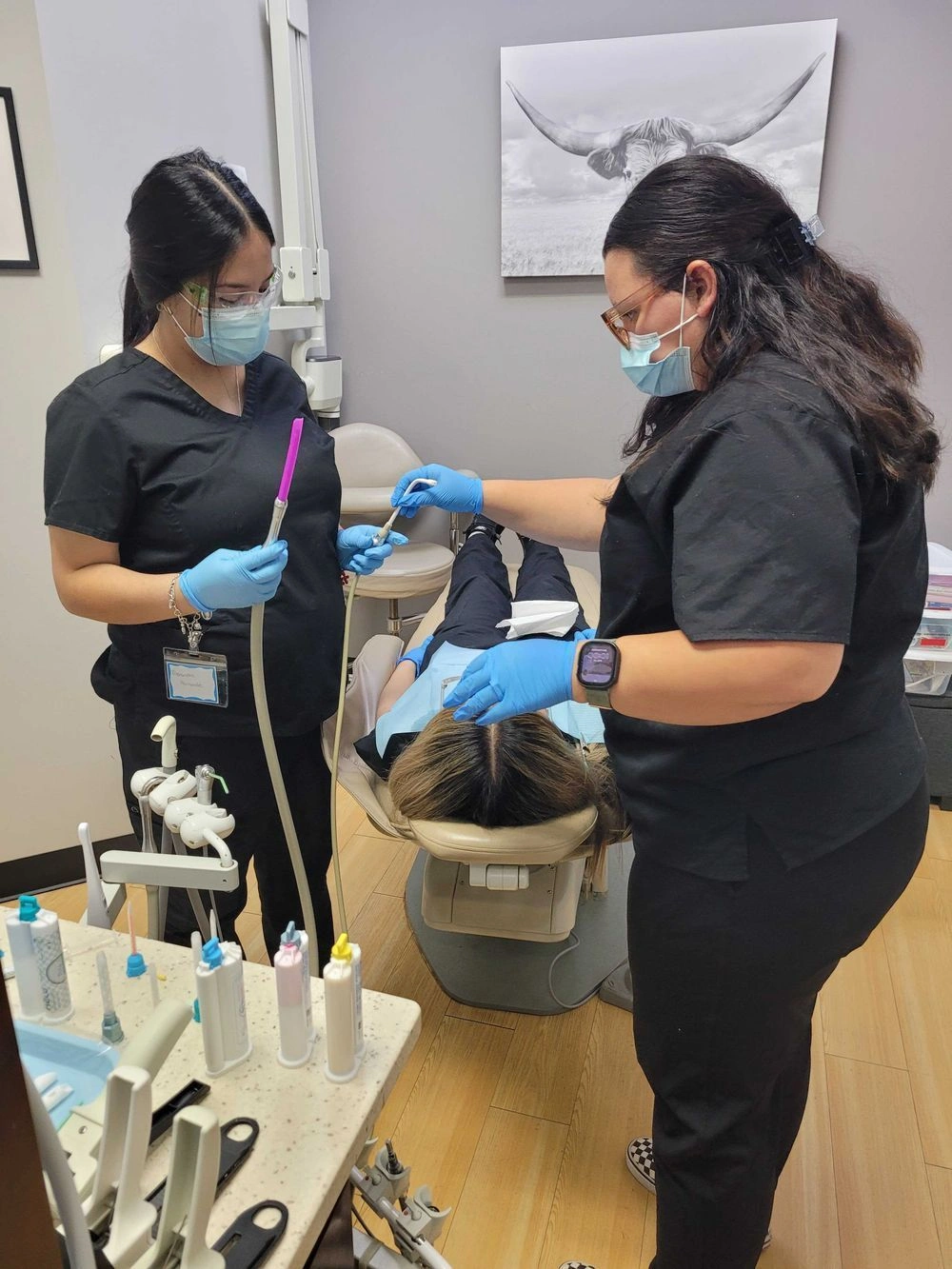
Birmingham Dental Assistant School trains inside working dental practices. You handle real instruments, operate real X-ray equipment, and practice sterilization on real autoclaves from week one.
2. Is hands-on practice the primary learning method?
Dental assisting is a physical profession. Skills like instrument passing, radiograph positioning, and impression taking require muscle memory built through repetition. Programs heavy on lecture and light on practice produce graduates who know the material but can’t perform the tasks efficiently.
3. Is an externship included?
An externship places you in a local dental office for supervised patient care. This is where training becomes clinical experience — and where many graduates make the professional connections that lead to their first job.
Programs without externships leave a critical gap. Employers consistently rank clinical experience as the most important factor in hiring decisions.
4. Does the program prepare you for the RDA exam?
The Registered Dental Assistant (RDA) credential is the most widely recognized certification. Programs that integrate exam prep throughout the curriculum (not just the last week) produce significantly higher pass rates.
5. What does it cost — and are student loans involved?
| Program Type | Cost Range | Duration | |—|—|—| | Focused vocational program | $2,000–$5,000 | 10–12 weeks | | Community college certificate | $5,000–$15,000 | 9–12 months | | Associate degree program | $10,000–$25,000+ | 18–24 months |
For short-term training programs, student loans are unnecessary. Payment plans that let you pay as you go protect you from starting your career with debt.
WIOA funding: If you’re eligible, the Workforce Innovation and Opportunity Act may cover partial or full tuition for approved programs. Check CareerOneStop.org to find your local American Job Center.
6. Does the schedule work for your life?
Evening and weekend classes allow working adults to train without quitting their current job. If a program only offers weekday daytime classes, it may not be realistic for your situation.
Why Location Matters
Local externship = local connections
When your classes are in Birmingham, your externship is in Birmingham. You build relationships with dental offices in your area — the same offices that hire when you graduate.
Shorter commute = higher completion
Training programs with long commutes have higher dropout rates. A nearby program makes consistent attendance realistic, especially for evening and weekend schedules.
Community network
Local classmates, instructors, and dental professionals become your professional network. Those connections support your career long after you complete the program.
Career Data
The Bureau of Labor Statistics reports:
- Median salary: $46,540/year ($22.38/hour)
- Job growth: 7% through 2033
- RDA certification premium: $2,000–$6,000/year
- O*NET classification: Bright Outlook (rapid growth, large number of openings)
Get Started at Birmingham Dental Assistant School
- See the full curriculum: Program details
- Review tuition and payment options: Tuition
- Talk to our team: Contact us
- Apply today: How to apply
You're 12 weeks from the dental assistant career you deserve.